SCOPE CITY AIDiscuss your pipelineTalk to us
Procedural OpenUSD cities for physical AI

Welcome to Scope City.
Where physical AI trains for reality.

High-fidelity, reconfigurable urban environments — from a compact training block to district-scale environments based on San Francisco street topology. Native OpenUSD for NVIDIA Isaac Sim, with authored semantics and collision, built for teams that generate data in-house.

Working schematic — Isaac Sim footage in production

The problem

Your robotics team should not have to become a city-production studio.

High-fidelity urban environments are expensive to build, difficult to vary and rarely ready for an existing simulation pipeline. Scope City provides the reusable world so your team can concentrate on the robot, model and data-generation pipeline.

The point

We supply scenes.
Not data.

Scope City hands you the world itself: a reconfigurable OpenUSD city scene for NVIDIA Isaac Sim and Omniverse. You operate the sensors, domain randomization, labels and volume inside your own pipeline. Your generated outputs remain under your control.

01

You run the sensors

Configure the cameras and simulated sensors your pipeline requires — your rigs, your intrinsics, your mounting points.

02

You create proprietary data

Segmentation, bounding boxes, depth — a training set generated privately in your own stack, to your own schema.

03

You set the volume

Generate small validation runs or production-scale datasets without rebuilding the environment for each run.

Running data generation with an in-house team?
Then Scope City was built for you.

You already own the pipeline — we supply the reusable world it runs on.

The evaluation scene

The Centerpiece.

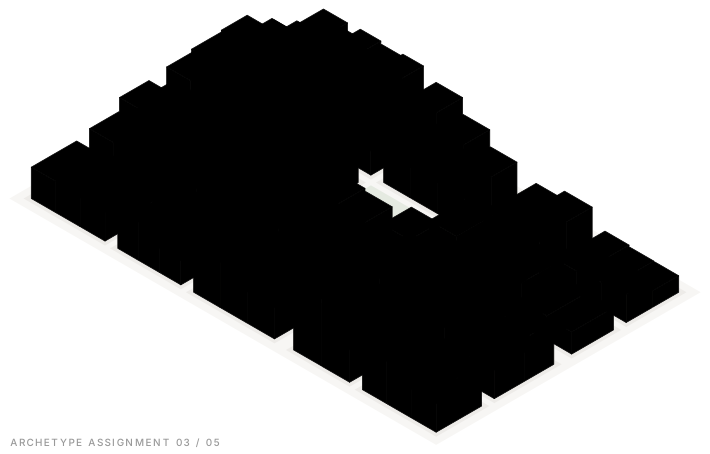
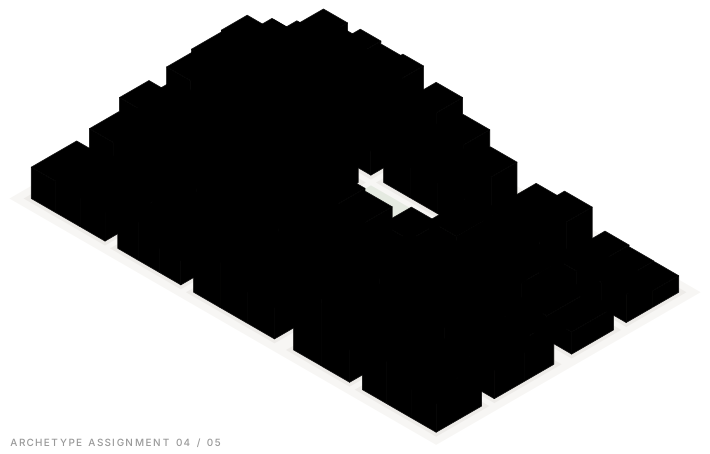
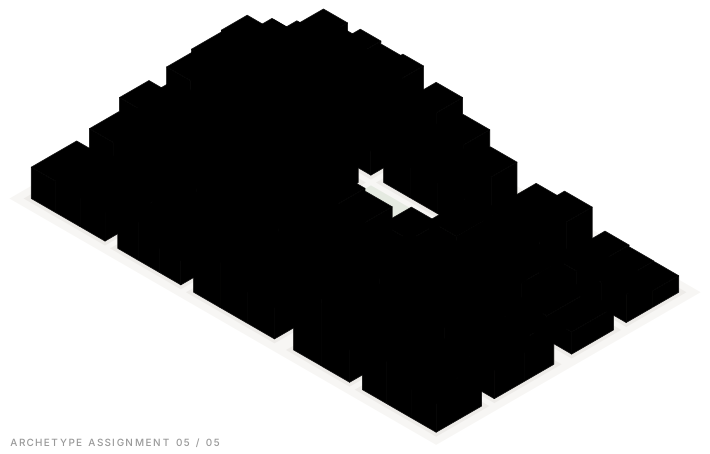
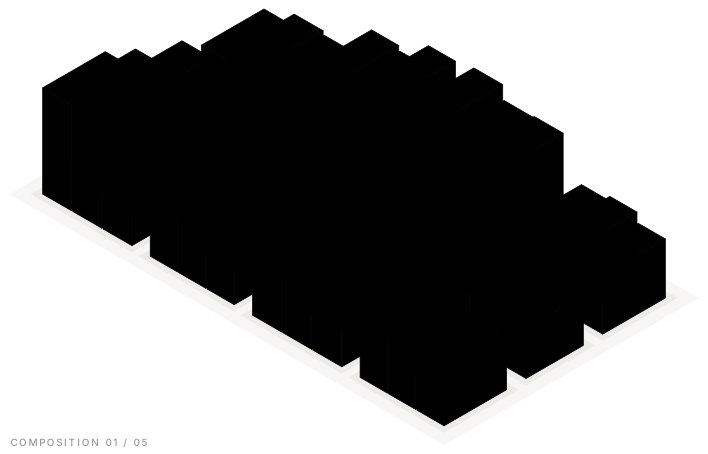
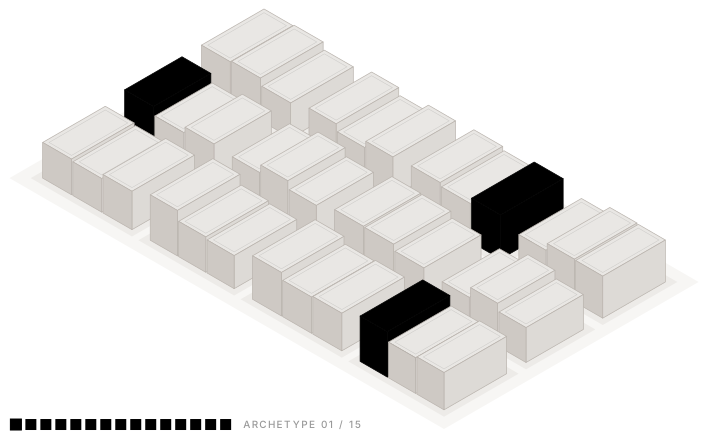
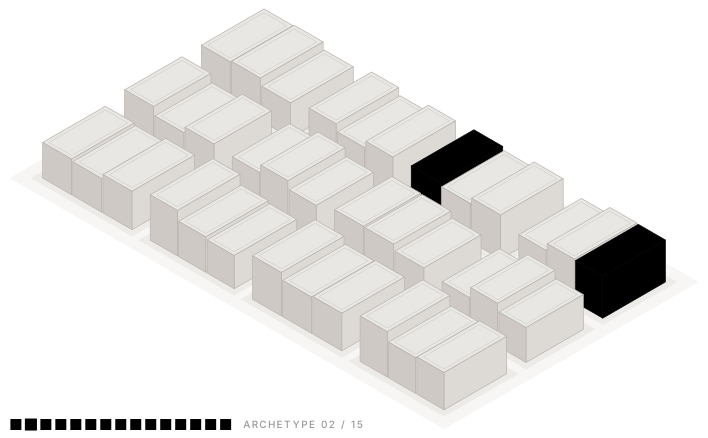
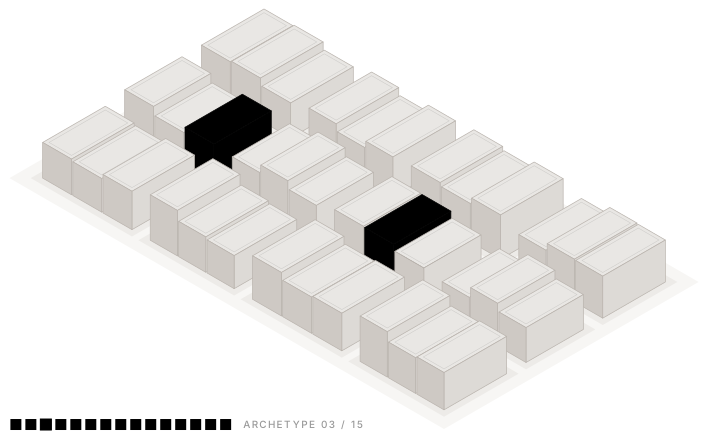
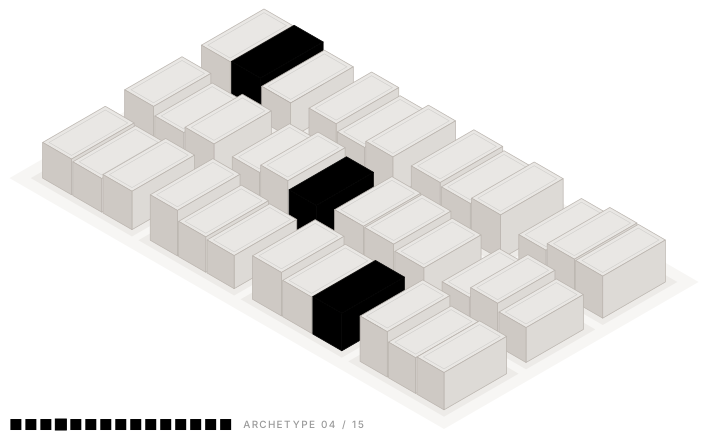
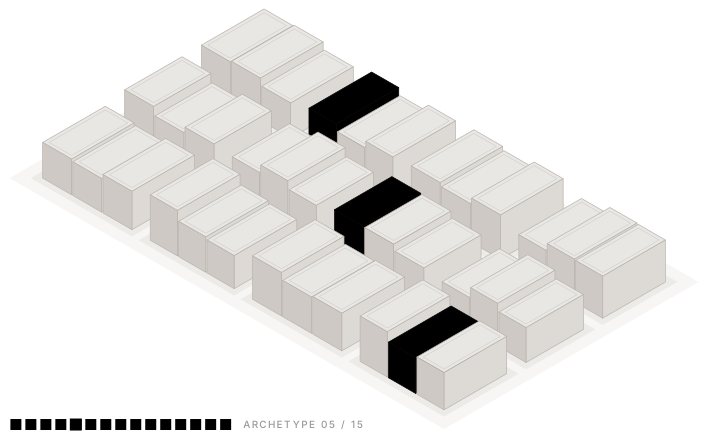
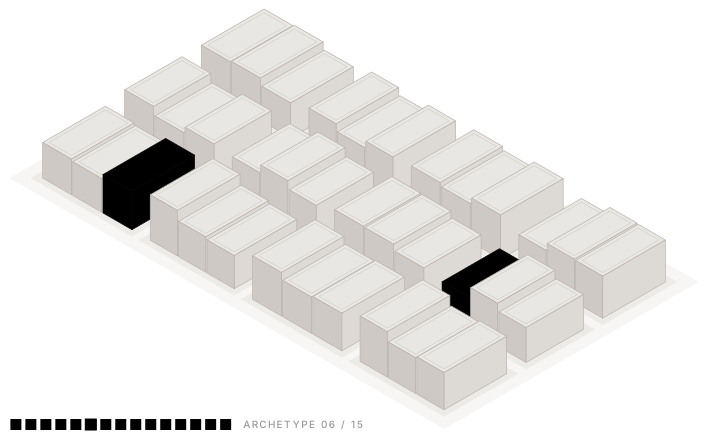
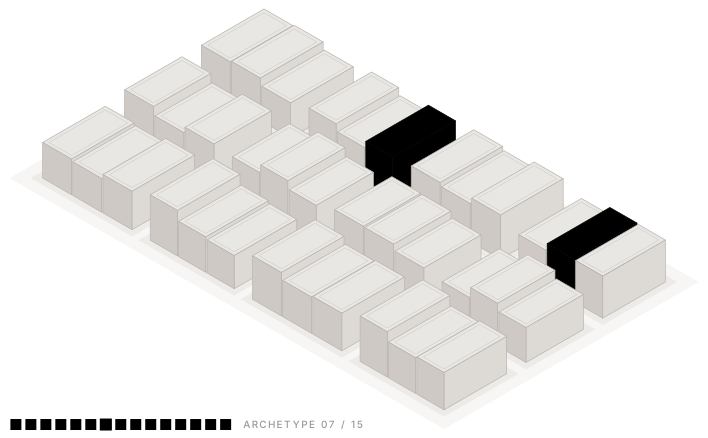
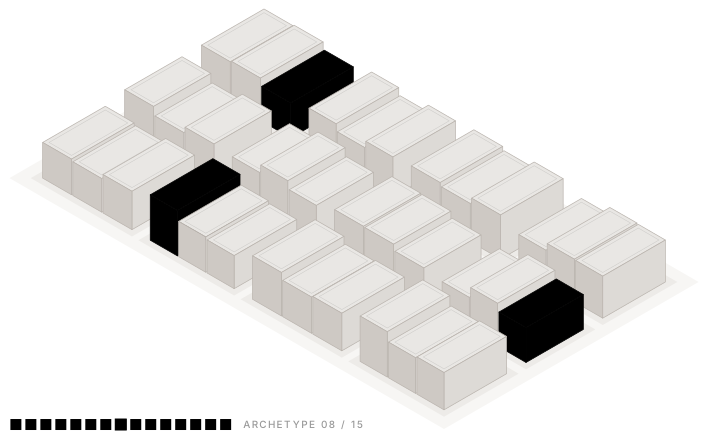
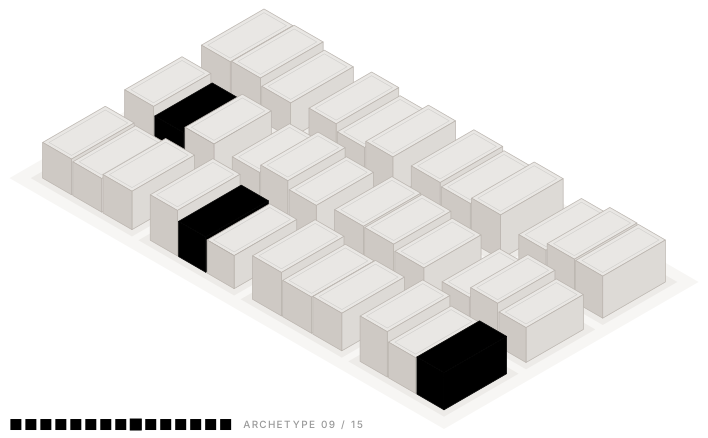
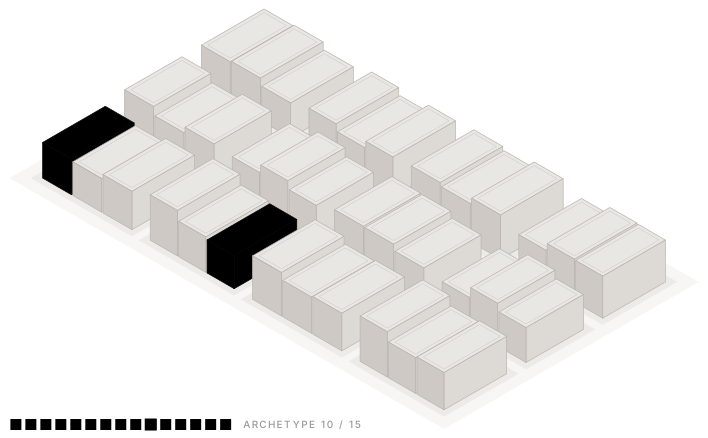
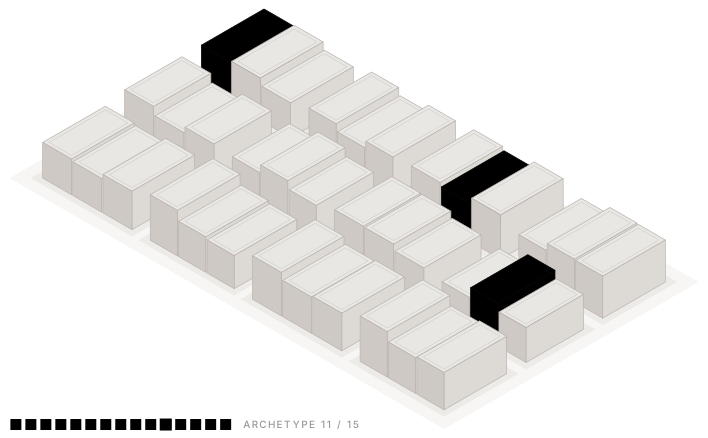
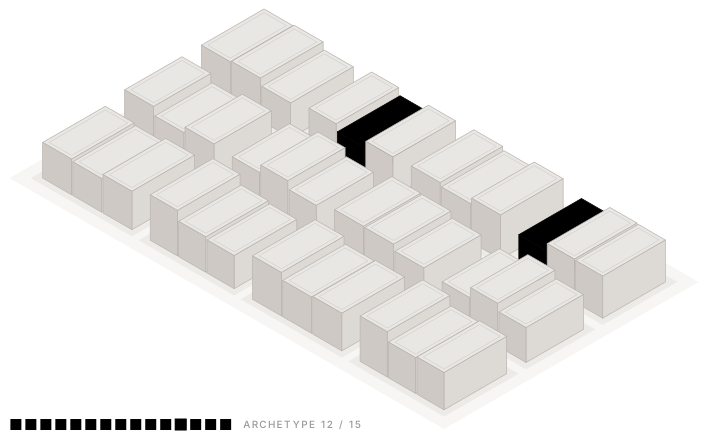
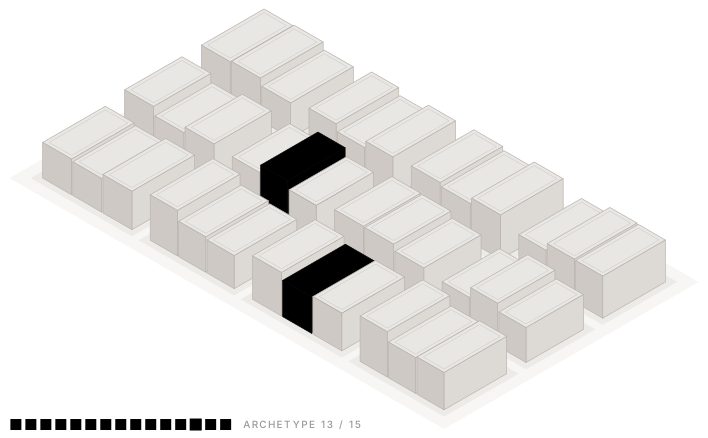
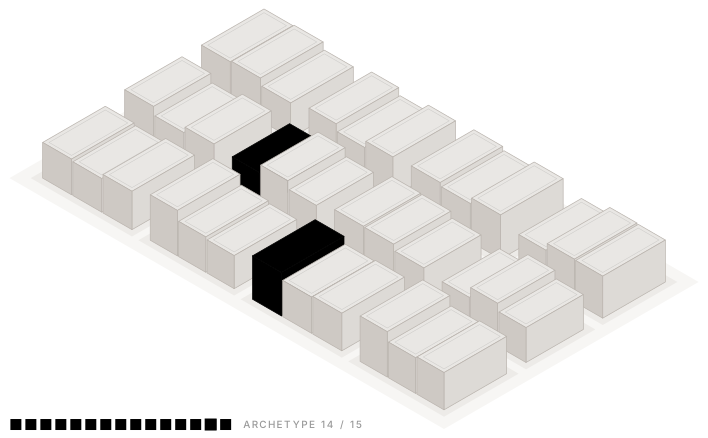
The Centerpiece is the compact evaluation scene we use for demonstrations and technical assessment — before you license a larger city build. Five plots, ten archetypes each: swap any archetype on any plot and the city reconfigures — geometry, materials, context. The figures on this page are working schematics of how it behaves — stills and film from the scene itself are in production. Scene specifications — footprint, semantic taxonomy, collider coverage, tested Isaac Sim version and performance figures — are part of the evaluation package.

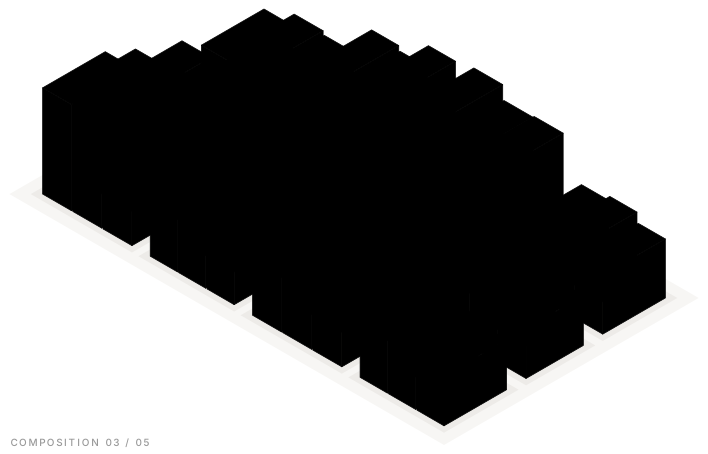
Schematic — composition 01 of 05: the same block massed as a different city
Schematic — composition 03 of 05: the same block massed as a different city
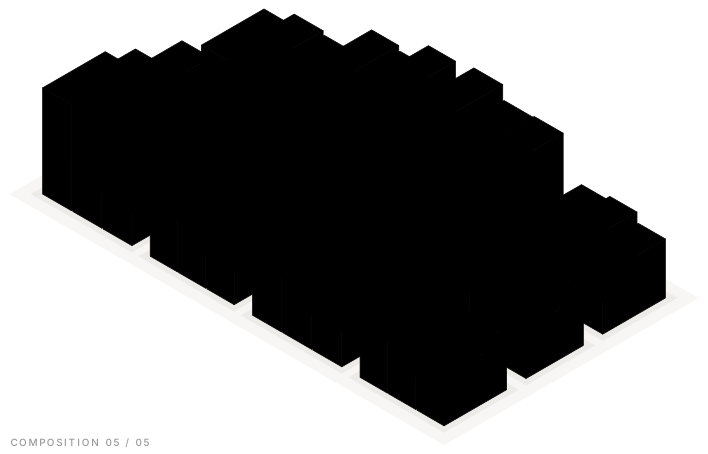
Schematic — composition 05 of 05: the same block massed as a different city
Same block, same camera, three compositions — three different cities for your model.

Archetype swap — animated schematic · live scene capture in production

Scope of the scene

We supply the environment.
You control the scenario.

Scope City is the environment — not the actors or the weather. We draw the line clearly, so an evaluation never surprises you.

Available now

In every scene

Static urban geometry, street topology, parcels, curbs, colliders and authored semantic classes — used with the cameras, sensors and annotators you configure in Isaac Sim.

Your pipeline

Yours, in Isaac Sim

Pedestrians, vehicles, weather, time of day and lighting. You place and randomize them in Isaac Sim, on your terms. We don't ship agents — by design. Your scenarios stay yours.

In development

Simulation edition

Physical materials, friction and mass properties — developed in alignment with NVIDIA's SimReady guidance.

Technical fit

See whether the Centerpiece fits your pipeline.

Tell us what you are training and what your current environments cannot provide. We'll assess technical fit first, then tailor the live demonstration around your task.

Discuss your pipelineBook a 30-minute call
Two editions

What are you training?

The answer picks your edition. Same geometry, same archetypes, same reconfigurability — tuned to the task.

Perception edition

For training that watches the world.

Perception models · World-model training data

Use the scene with the cameras and simulated sensors configured in your Isaac Sim pipeline — your rigs, your intrinsics.

Authored semantic classes support the generation of segmentation masks, 2D and 3D boxes and other annotations through your existing annotators.

Available now.
Simulation editionIn development

For training that touches the world.

Navigation · Locomotion · Manipulation · Reinforcement learning

Building on the colliders and semantics already in every scene: physical materials, mass and friction — every surface simulation-tuned.

Physics included at release.

Designed toward NVIDIA SimReady requirements.

Both editions are built for every footprint — start with a block, validate, then scale to district size.

The pipeline

Procedural cities at scale.

Scope City is generated from real street topology, grounding the scene in recognizable urban layouts and spatial relationships.

01

Real-street layout.

Streets, parcels and parks generated from real map data — real-world topology across supported districts.

02

Context-aware buildings.

Neighbour-aware massing and level splitting — blocks read like cities that grew over time.

03

Built for difficult terrain.

Slopes, stepped foundations, curb geometry — built on San Francisco hills, the hard case first.

04

Scale on demand.

From one intersection to a district — the pipeline regenerates everything on demand.

05

One calibrated library.

Every asset, material and texture is authored in-house and calibrated to a single standard — scale, material response, texel density. Scenes assembled from mixed vendors never match; that harmonizing work never lands on your team.

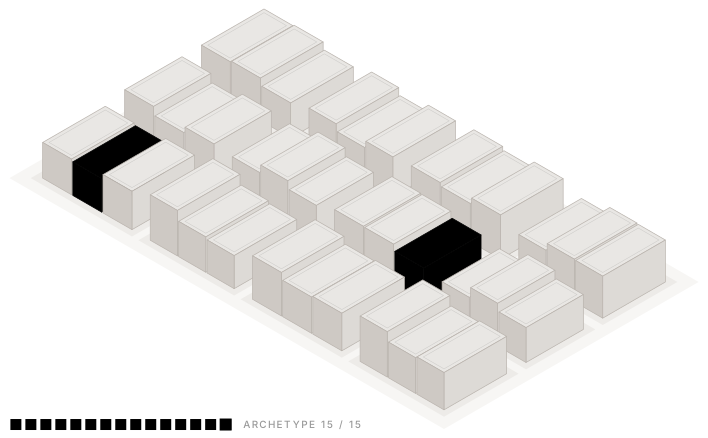
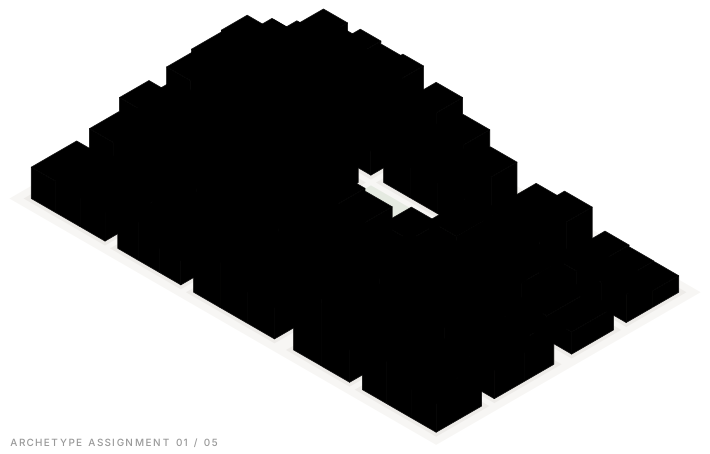
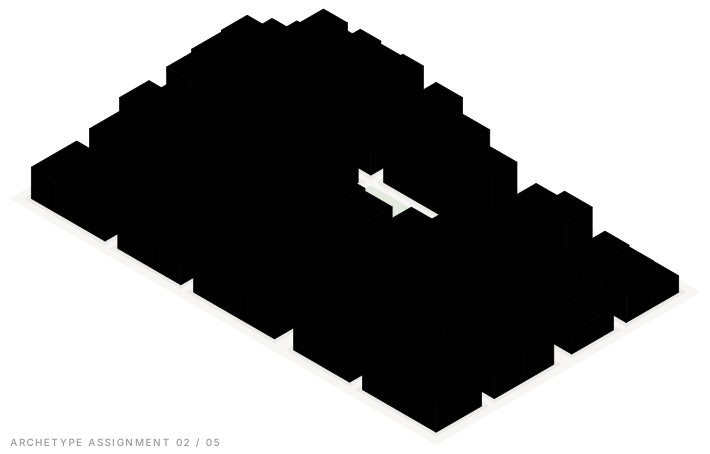
Assignment matrix schematic: 655 plots distributed across 15 archetypes

District assignment matrix — 655 plots × 15 archetypes

The license

One annual license.
All your training.

Scene licensing written for AI teams — the questions we get asked first, answered first.

01

Native in Isaac Sim.

Delivered as native OpenUSD for NVIDIA Isaac Sim and Omniverse — no intermediary scene-conversion pipeline required.

02

Every internal training use.

Synthetic data generation, reinforcement learning, generative world models — one annual license per scene covers all of it.

03

Licensed to export.

Your license covers exporting scenes into other software for internal use. OpenUSD gives them a portable foundation — free to adapt tool by tool.

04

You own the outputs.

Every generated frame, annotation, derived dataset and trained model is yours, permanently. The one thing that stays licensed is the scene itself — the USD is not for redistribution.

05

Clean provenance, end to end.

All authored 3D assets are created in-house to one calibrated standard, with a documented source and licence chain for map-derived topology. Full provenance documentation is available during evaluation.

06

What you receive.

The licensed scene itself, delivered as native OpenUSD — geometry, materials, authored semantic classes and the per-plot archetype set behind every configuration shown here. The procedural system that generates new districts is not part of the licence: it stays with us — you license its output, ready to load.

The licence permits all internal AI training and validation uses; available capabilities depend on the licensed edition.
Who it's for

Built for machines that work the city streets — and skies.

Urban environments concentrate the geometric conditions that make physical AI difficult: occlusion, elevation changes, narrow clearances, complex intersections, curb transitions, façades and constrained sightlines. Scope City supplies that environment; your pipeline adds the actors, weather and scenarios.

01

Sidewalk & last-mile robots

Curbs, ramps, crossings, street furniture — the geometry that decides whether delivery works.

02

Drone & aerial delivery

Rooftop approaches, façade proximity, urban canyons rebuilt in every configuration.

03

Urban ground vehicles

Delivery vans, inspection and cleaning platforms — full-street geometry at vehicle scale: lanes, curbs, clutter.

04

World foundation models

A reconfigurable urban substrate for multi-view, multi-sensor observation — you generate the volume, the city supplies the variation.

Behind the scenes

Two decades of world-building, applied to physical AI.

Built by The Scope

Twenty years of high-end CGI production — including Audi's Formula 1 launch — now pointed at simulation. Houdini work featured by SideFX, the makers of Houdini.

Recognized R&D

The underlying development project was recognized by the BSFZ as qualifying research and development under Germany's Forschungszulage framework.

How we work

Start with the problem.
Then see the city.

We begin with your training goals, current environment pipeline and biggest limitations. The first call is a technical fit discussion, not a generic sales presentation — if there’s a fit, the next conversation is a live demonstration built around your task.

01 · Discover

Tell us what you are training

We discuss your current simulation stack, how you source urban environments, and where realism, variation, scale or production effort is limiting you.

02 · Demonstrate

See the relevant parts live

We tailor the scene demonstration to your problem — visual diversity, urban geometry, Isaac Sim integration, navigation, sensor generation or scale.

03 · Evaluate

Decide whether there is a fit

We define the appropriate scene, edition, evaluation and commercial next step.

Next step

What is limiting your simulation today?

Tell us what you are training, how you currently build or source urban environments, and where the process breaks down. We will use the first call to understand the problem. If Scope City is relevant, we will schedule a tailored live demonstration.

We reply within one business day to schedule your call. Your details go to The Scope GmbH and are used only to respond to your request. See our Privacy Policy.
Or pick a time nowBook a 30-minute call
Thank you — we've got it.

We'll come back within one business day with times for a discovery call. If Scope City fits your problem, a tailored live demonstration follows.

Stay in the loop.

Check your inbox.

Confirm the email we just sent and you're following the build. Nothing else lands in your inbox until then.